How to Send Money to Venezuela from Spain
How to Send Money to VenezuelaAlthough it is becoming e...
February 10, 2023



One of the areas where we tend to have the most questions when we start living in a new country is usually the laws and regulations in effect there. Today we’re going to try to clarify an issue that can lead to confusion and uncertainty for new residents settling into life in Spain. Whenever you start a new life in a new country, there are always extra expenses that you have to deal with—such as purchases, bills, or sending money to family members to help them out. Or perhaps you receive your first paychecks in cash and have to take it upon yourself to deposit them in a bank.
The Spanish Ministry of Finance and the Bank of Spain monitor bank transactions to ensure that they all comply with current legislation. And even if the cash deposit or withdrawal we are making is entirely legitimate, it is important to clearly understand the limits established by law for conducting these financial transactions at any financial institution.

The legislation passed to limit the amount of cash you can deposit or withdraw has a very simple reason: the government wants to prevent the circulation of black money and money laundering—that is, money obtained through illegal means, whether by working without being registered with Social Security or through illicit activities.
This type of illicit business or activity—what we know as the underground economy—is estimated to account for at least 10% of the country’s Gross Domestic Product (GDP). Bringing this money into the legal system would help increase government revenue through the taxes it would generate.
To monitor these transactions, the Ministry of Finance and the Bank of Spain rely on banks and other entities, such as payment service providers, and require them to report certain money transfers that may be suspicious—either because of the amount involved or the manner in which they are conducted.
In general, if you plan to deposit money into a Spanish bank account, we recommend that you do not exceed 3,000 euros. It is not illegal to save and deposit more money, and you can do so; however, you should keep in mind that in such cases, the bank is required to report the transaction and may ask you to provide proof of the source of the funds.
Failure to do so may result in a tax violation. In addition, any transaction involving cash deposits and €500 bills may be investigated. Although many have been withdrawn from circulation, there are still many €500 bills in circulation, and their use is perfectly legal. However, in many cases, they are used for illegal activities, which is why the Ministry of Finance wants to know about all transactions involving these notes.
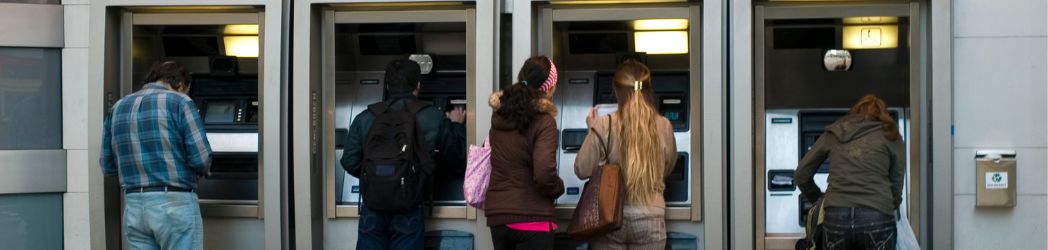
It is becoming increasingly common to make deposits directly at ATMs, either for convenience or because the bank requires us to use them.
Legally, it depends on whether you are depositing money into your own account or whether someone else is depositing money into another person’s account.
Just as with in-person deposits at the teller window, when a deposit reaches the well-known 3,000-euro threshold, banks will, of course, once again be required to report such transactions. As for the limit, it depends on your bank. But in many cases, you won’t have much trouble depositing large amounts.
The problem arises when you make a deposit on behalf of third parties, since financial institutions must verify the identity of those wishing to make a deposit. Therefore, these transactions are strictly limited, and in many cases, amounts exceeding 1,000 euros cannot be transferred to a third party’s account using this method.
If you have to pay a very large amount to buy something or pay for a service, it’s best to do so by bank transfer or credit card.
First and foremost, it’s safer because you don’t have to carry a lot of cash around. If you get robbed or lose it, it will be very difficult to recover all that money. Plus, if you have any issues with the company providing the services, you’ll be able to clearly prove that you’ve made the required payments.
If you still want to pay in cash, you should keep in mind that the Spanish Tax Agency and the Bank of Spain currently prohibit cash payments exceeding 1,000 euros. This is specifically to prevent money laundering and to ensure that all money involved in commercial transactions comes from legitimate businesses.

If you need to send money to your family abroad without having to pay in cash, Money Exchange makes it easy for you so that you don’t run into any problems and everything is fast, simple, and secure.
In addition to accepting credit and debit card payments at all our offices, we also offer you the option to send money through our website and pay via bank transfer, Bizum, or credit/debit card. Your payment is always processed through secure payment gateways, and you can rest assured that you’re using one of Spain’s leading international money transfer agencies for the past 25 years.
Since we are registered as a payment institution with the Bank of Spain, you can rest assured that we will always comply with current regulations, ensuring that you won’t encounter any problems in the future.
And of course, you’ll be able to take advantage of some of the best exchange rates on the market, all from the comfort of your own home.
How to Send Money to VenezuelaAlthough it is becoming e...
Send Money SafelySending money through various methods ...